- (913)-387-1104
- office@rsvpmedspa.com
- 13300 Metcalf Ave, Overland Park, KS 66213
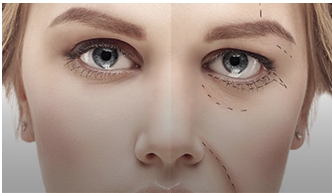
Upper blepharoplasty is a procedure that rejuvenates droopy or saggy eyelids. The skin around the eyes is among the thinnest and most delicate on the entire body. As you age, one of the first places that you’ll start to notice a change in your appearance is in your eyes. The muscles supporting your eyelids begin to weaken, which can result in excess fat gathering above and below your eyelids, causing sagging eyebrows, droopy upper lids, and bags under your eyes.
Eyelid surgery seeks to revitalize your eyes by providing a natural, youthful and refreshed appearance. A blepharoplasty is an outpatient procedure but is performed on one of the most sensitive areas of your body, with a very specialized anatomy. This is why we always recommend that patients seeking eyelid surgery have it performed by oculoplastics specialist Dr. Fu.
An upper blepharoplasty is performed on your upper eyelids and can be performed independently or at the same time as a lower blepharoplasty.
The results from your blepharoplasty can be life changing, helping you feel not only more confident in the way you look, but also in how you interact with others. Your eyes will be brighter, fuller and have more expressiveness than they have had in years.
Surgery should be scheduled for a time when you can relax for at least 1-2 weeks. It is important to avoid any strenuous activity, heavy lifting, or bending down during this time to avoid complications and to promote the best healing. It is also important to avoid taking any blood thinning medications for at least two weeks prior to surgery. If you are on a blood thinning medication due to a specific medical condition, you will need to discuss this with Dr. Selena Fu and your primary care physician prior to stopping any medication. Dr. Selena Fu’s staff will review a list of common medications, supplements and vitamins that can cause your blood to be thinner.
Please note that Dr. Fu expects to see patients back in the office a few days after a procedure to ensure that the healing process is going as expected and that you are on track for a good result. Do not plan any travel immediately after your procedure.
Selecting the right cosmetic surgeon is a choice that you live with for years, if not your entire life. A successful procedure will make you feel more like yourself and give you greater confidence for years to come. On the other hand, selecting the wrong surgeon increases your chances of having poor results, which can lead to additional costs, time, and heartache.
When choosing your surgeon, there are a few key points to keep in mind:
An upper blepharoplasty is typically performed using only local anesthesia in Dr. Selena Fu’s procedure room. In some cases the surgery may be performed at an off-site surgery center for additional sedation, but only in very rare cases would general anesthesia be used.
Dr. Fu begins by making an incision above the eye, in the natural crease of the eyelid or where a lid crease is to be created. Putting the incision here makes it so that scarring from the procedure will be less visible. Once the incision is made, she removes and adjusts tissues using specialized surgical instruments including microsurgical instruments.
The specific techniques that Dr. Fu uses will be selected based on your needs. Because Dr. Fu has such specialized training, she has access to a number of techniques that are not utilized by most other doctors, and she will tailor these techniques to get the best outcome for you.
Once Dr. Fu has achieved the desired restructuring and reshaping of your eyelids, she places sutures to smooth and reconfigure your eyelids. The sutures are finer than a human hair and will be removed 5-7 days after surgery.
An upper blepharoplasty typically takes about 1 – 2 hours from start to finish.
An upper blepharoplasty will have scars in the natural crease of your eyelid that may not be visible after you have fully healed. Non-specialized surgeons typically have results with more visible scarring.
Eyelid surgery is generally a very safe procedure. When considering any eyelid surgery, it is important to inform your surgeon of any abnormalities of your eyes, vision, or your general medical health. Dr. Fu requires all eyelid surgery patients to have a full eye exam with dilation completed within the last year before scheduling surgery.
It is important to remember that while all surgery carries some risks, even when performed by the most highly trained surgeon and at the best facilities. Below are some of the more common risks associated with eyelid surgery:
The likelihood of serious complications arising from the procedure is typically influenced by both the surgeon’s skill as well as the patient’s individual response to the eyelid surgery. Certain severe risks or complications can be avoided by cooperating fully and completely following your surgeon’s instructions. With patience, a willingness to cooperate, and a qualified surgeon, the complications of eyelid surgery and any associated risks can be dramatically reduced.
Blepharoplasty is eyelid surgery designed to improve excess eyelid skin, puffiness, under-eye bags, and signs of aging around the eyes. The procedure may involve the upper eyelids, lower eyelids, or both depending on the patient’s concerns and anatomy.
Upper blepharoplasty may help improve:
Lower blepharoplasty may help improve:
Ptosis repair surgery corrects drooping of the upper eyelid caused by weakness of the eyelid lifting muscle. Unlike blepharoplasty, which primarily addresses excess skin and puffiness, ptosis repair focuses on improving eyelid position and function.
Patients with ptosis may experience:
An oculoplastic surgeon can determine whether ptosis repair, blepharoplasty, or a combination approach is most appropriate.
An oculoplastic surgeon completes advanced fellowship training focused specifically on:
Because the eyelids are delicate and functionally important, many patients prefer a specialist with extensive expertise in eyelid anatomy, blinking mechanics, facial balance, and natural-looking cosmetic outcomes.
Dr. Selena Fu combines advanced surgical precision with aesthetic artistry to create refined, balanced, and individualized results.
Recovery timelines vary depending on the procedure and individual healing.
Most patients can:
Mild swelling and bruising are common initially and continue improving gradually over several weeks. Complete healing and final results may continue refining over several months.
Most patients experience mild discomfort, tightness, swelling, or irritation rather than significant pain after eyelid surgery.
Discomfort is typically manageable with:
Many patients are pleasantly surprised by how manageable recovery feels overall.
Swelling and bruising are expected after eyelid surgery and usually improve significantly within one to two weeks.
Minor residual swelling may continue resolving gradually over the following several weeks as healing progresses.
Healing timelines vary based on:
Many patients return to work within several days to approximately one week depending on:
Patients with public-facing jobs sometimes choose additional recovery time while bruising resolves.
Patients are generally advised to avoid eye makeup until the surgical area has healed appropriately. Most patients may resume makeup approximately two weeks after surgery, although healing recommendations vary depending on the procedure and recovery progress.
Your surgeon will provide individualized instructions during follow-up visits.
Light walking and gentle activity are often permitted relatively quickly after surgery.
However, patients are usually advised to avoid:
for approximately one to two weeks or as directed by their surgeon.
Following activity restrictions carefully may help reduce swelling and support smoother healing.
Modern eyelid surgery techniques are designed to conceal incisions carefully within natural eyelid creases or inside the eyelid whenever possible. As healing progresses, scars typically become minimally visible. Choosing an experienced oculoplastic surgeon helps optimize incision placement and natural-looking outcomes.
Yes. Upper eyelid surgery and ptosis repair may improve peripheral vision when heavy eyelids or drooping eyelid muscles obstruct the visual field.
Many patients also notice:
Functional improvement is often an important benefit of eyelid surgery.
Blepharoplasty is a surgical procedure designed to remove or reposition excess skin and tissue around the eyes.
Non-surgical eye rejuvenation may include:
Some patients benefit from surgery, while others achieve meaningful improvement through minimally invasive treatments.
Yes. Modern eyelid surgery techniques focus on subtle, natural-looking improvement rather than dramatic transformation.
The goal is typically to help patients appear:
while preserving natural facial expression and facial identity.
There is no specific “perfect age” for eyelid surgery.
Some younger patients seek treatment for hereditary under-eye bags or ptosis, while older patients may pursue treatment for aging changes that affect appearance or vision.
Treatment recommendations depend more on anatomy, symptoms, and personal goals than chronological age alone.
Yes. Many patients combine eyelid surgery with:
Combination treatment plans may help create more comprehensive facial rejuvenation.
A personalized consultation with an experienced oculoplastic surgeon can help determine whether surgery or non-surgical treatment would best match your anatomy, symptoms, and goals.
Consultations often include:
Patients often feel more comfortable once they better understand available options and realistic expectations.
If you are bothered by heavy eyelids, under-eye bags, puffiness, tired-looking eyes, or vision changes related to eyelid anatomy, personalized treatment options are available. At Cosmetic Eye Institute in Overland Park, KS, Dr. Selena Fu provides advanced surgical and non-surgical eyelid rejuvenation treatments for patients throughout Kansas City and surrounding communities.
Schedule your personalized consultation today to discuss blepharoplasty, ptosis repair, under-eye rejuvenation, and customized treatment options designed to achieve natural-looking, refreshed results.