
The eyes play an important role in facial expression, communication, and first impressions. When the upper eyelids begin to droop, the eyes may look tired, heavy, less alert, or older than you feel. In some cases, droopy eyelids can also interfere with the upper or peripheral field of vision.
The right treatment depends on what is causing the drooping. Some patients have excess upper eyelid skin that may improve with upper blepharoplasty. Others have a low eyelid position caused by muscle weakness, which may require ptosis surgery. Many patients have both concerns.
At Cosmetic Eye Institute in Overland Park, Dr. Selena Fu, a board-certified ophthalmologist and fellowship-trained oculoplastic surgeon, evaluates droopy eyelids with attention to both appearance and eyelid function. A specialist consultation can help determine whether eye surgery for droopy eyelids may improve appearance, vision, comfort, or a combination of concerns.
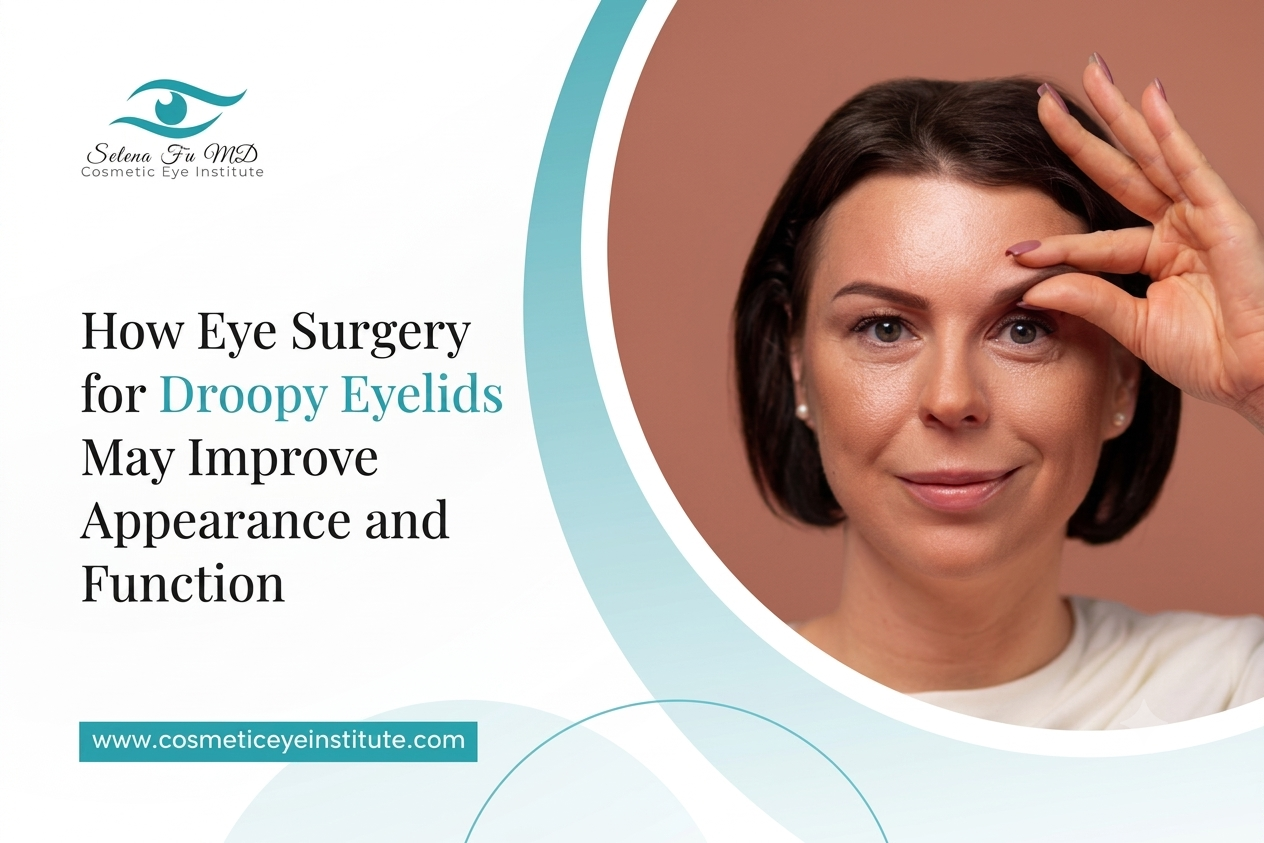
What Causes Droopy Eyelids?
Droopy eyelids can develop for several reasons. The skin around the eyes is thin and delicate, so it may lose elasticity over time and begin to fold over the natural upper eyelid crease.
Common causes include:
- Excess upper eyelid skin
- Weakening of the eyelid-lifting muscle
- Brow heaviness
- Age-related tissue changes
- Eyelid asymmetry
- Prior eyelid or eye surgery
- Genetics
- Certain medical conditions
In some patients, the eyelid itself sits too low over the eye. This condition is called ptosis. Ptosis is different from excess eyelid skin, although both can create a tired or heavy appearance. Identifying the difference is important because each condition requires a different surgical approach.
Blepharoplasty vs. Ptosis Surgery: What Is the Difference?
Many patients use the phrase “droopy eyelids” to describe several different concerns. The correct treatment depends on the anatomy.
Upper blepharoplasty removes excess upper eyelid skin and, when appropriate, adjusts underlying tissue. It is often used when loose skin creates a hooded or heavy appearance.
Ptosis surgery corrects a low eyelid position by adjusting the muscle or tendon responsible for lifting the eyelid. It is often needed when the eyelid margin sits too low over the eye.
A simple way to understand the difference:
- Blepharoplasty treats extra skin.
- Ptosis surgery treats a low eyelid position.
- Some patients need both.
Choosing the wrong procedure may leave the concern only partially improved, which is why a detailed eyelid evaluation matters.
How Eye Surgery for Droopy Eyelids Can Improve Appearance
Heavy upper eyelids can make the eyes look smaller, older, or constantly tired. When the correct procedure is chosen, eyelid surgery may create a more open, rested, and balanced appearance.
Surgery may help improve:
- Hooded upper eyelids
- Heavy eyelid folds
- A tired or sleepy appearance
- Eyelid asymmetry
- Difficulty applying eye makeup
- A less open eye shape
- Facial imbalance caused by eyelid heaviness
The goal is not to create an exaggerated or overcorrected look. At Cosmetic Eye Institute, treatment planning focuses on restoring a natural, refreshed appearance while preserving each patient’s facial identity and eyelid function.
How Droopy Eyelid Surgery May Improve Function
For some patients, droopy eyelids are more than a cosmetic concern. Excess upper eyelid skin or a low eyelid position may block part of the visual field, especially upper or peripheral vision.
Patients may notice:
- Raising the eyebrows to see better
- Eyelid heaviness by the end of the day
- Eye fatigue during reading or screen use
- Upper eyelids blocking vision
- One eye appearing more closed than the other
- Tilting the head back to see more clearly
When functional concerns are present, Dr. Fu may evaluate eyelid measurements, vision symptoms, and whether additional testing is appropriate.
Upper Eyelid Surgery vs. Under Eye Bag Surgery
Droopy upper eyelids and under-eye bags affect different areas and require different treatments.
Upper eyelid surgery, including upper blepharoplasty or ptosis repair, addresses concerns above the eyes. Under eye bag surgery in Overland Park, also called lower blepharoplasty, addresses puffiness, fullness, or bags beneath the eyes.
Lower blepharoplasty may involve removing or repositioning fat, tightening loose skin, or improving the transition between the lower eyelid and cheek. Some patients have both upper eyelid drooping and lower eyelid bags, treating both at the same time will afford one single down time; but treating both areas is not always necessary. Each concern should be evaluated separately.
When Under Eye Bag Surgery May Be Appropriate
Patients considering under eye bag surgery in Overland Park may be bothered by persistent puffiness, lower eyelid fullness, or shadowing beneath the eyes that does not improve with sleep, skincare, or lifestyle changes.
Lower eyelid surgery may help improve:
- Under-eye bags
- Puffy lower eyelids
- Bulging lower eyelid fat pads
- Loose lower eyelid skin
- A tired or aged appearance
- Shadowing caused by lower eyelid contour changes
Not every under-eye concern requires surgery. Fine lines, pigmentation, mild texture changes, or hollowing may be better treated with laser resurfacing, skincare, injectables, or a combined treatment plan.
Why a Detailed Eyelid Evaluation Matters
Droopy eyelids can be caused by skin, muscle, brow position, lower eyelid changes, or several factors at once. A detailed consultation helps identify the cause before treatment is recommended.
During an eyelid evaluation, Dr. Fu may assess:
- Upper eyelid skin excess
- Eyelid margin position
- Eyelid muscle function
- Brow position
- Lower eyelid bags or puffiness
- Facial symmetry
- Eye comfort and dryness symptoms
- Vision concerns
- Prior eye or eyelid or face procedures
- Medical history
- Desired cosmetic outcome
This individualized approach helps determine whether the best plan may involve upper blepharoplasty, ptosis surgery, lower blepharoplasty, under eye bag surgery, laser resurfacing, or a combination of treatments.
Why Choose an Oculoplastic Surgeon for Droopy Eyelids?
The eyelids protect the eyes, support blinking, distribute tears, and help maintain comfort. Because eyelid surgery affects both appearance and function, specialized training matters.
An oculoplastic surgeon has focused training in surgery of the eyelids, orbit, tear drainage system, and surrounding facial structures. Dr. Selena Fu’s background as a board-certified ophthalmologist and fellowship-trained oculoplastic surgeon allows Cosmetic Eye Institute to evaluate droopy eyelids from both a cosmetic and functional perspective.
What Results Can Patients Expect?
Results depend on the cause of the eyelid concern and the procedure performed. When treatment matches the anatomy, patients may notice a more open, rested, and balanced appearance.
Potential improvements may include:
- Less upper eyelid heaviness
- Improved eyelid contour
- More balanced eyelid position
- A more alert appearance
- Reduced under-eye puffiness when lower eyelids are treated
- Improved visual comfort in appropriate cases
- Natural-looking facial rejuvenation
Swelling and bruising are common early after eyelid surgery, and final results continue to refine over several months.
Schedule a Droopy Eyelid Consultation in Overland Park
Droopy eyelids do not have one single solution because they do not have one single cause. The right treatment begins with understanding whether the concern comes from excess skin, eyelid muscle weakness, brow position, under-eye bags, or a combination of factors.
If you are considering eye surgery for droopy eyelids or under eye bag surgery in Overland Park, Cosmetic Eye Institute can help you understand your options.
Schedule a consultation with Dr. Selena Fu at Cosmetic Eye Institute today to learn which eyelid surgery or cosmetic eye treatment may be right for your anatomy and goals.
Frequently Asked Questions
1. What is eye surgery for droopy eyelids?
Eye surgery for droopy eyelids may include upper blepharoplasty, ptosis surgery, or both. The correct procedure depends on whether the drooping is caused by excess skin, a low eyelid position, muscle weakness, or a combination of factors.
2. How do I know if I need blepharoplasty or ptosis surgery?
Blepharoplasty may be appropriate if excess skin creates heaviness or hooding. Ptosis surgery may be needed if the eyelid itself sits too low because of muscle weakness. A consultation helps determine the cause.
3. Can droopy eyelids affect vision?
Yes. Excess upper eyelid skin or a low eyelid position may block part of the visual field in some patients. A detailed evaluation can determine whether functional vision concerns are present.
4. What is under eye bag surgery?
Under eye bag surgery, also called lower blepharoplasty, improves puffiness, bags, or fullness beneath the eyes. It may involve removing or repositioning lower eyelid fat and improving lower eyelid contour.
5. Can under eye bag surgery be done with droopy eyelid surgery?
Yes. Some patients benefit from treating both upper eyelid drooping and lower eyelid bags. The decision depends on anatomy, goals, eye health, and recovery considerations. Combining both surgeries allow for one single healing time with potential savings in facility and anesthesia cost.
6. Will eyelid surgery make me look different?
The goal is usually to help the eyes look more rested, open, and refreshed while preserving natural facial identity. For patients who desire a more noticeable change, the plan should still maintain facial harmony and eyelid function.
7. How long does recovery from eyelid surgery take?
Many patients return to routine daily activities within 1 to 2 weeks, although swelling, bruising, and final refinement continue over several months.
8. Will eyelid surgery leave visible scars?
Incisions are usually placed in natural eyelid creases or discreet lower eyelid locations. Scars generally become less noticeable as healing progresses.
9. Are eyelid surgery results permanent?
Results can be long-lasting, but natural aging continues. Skin quality, genetics, sun exposure, and lifestyle may influence how the eyelids change over time.
10. Why choose Cosmetic Eye Institute for droopy eyelid surgery?
Cosmetic Eye Institute focuses on cosmetic and functional eyelid procedures. Dr. Selena Fu is a board-certified ophthalmologist and fellowship-trained oculoplastic surgeon with specialized training in eyelid anatomy and eye-area surgery.
11. Does Cosmetic Eye Institute serve Overland Park and Kansas City patients?
Yes. Cosmetic Eye Institute serves patients from Overland Park, Leawood, Kansas City, Olathe, Prairie Village, and surrounding communities.
12. How do I schedule a consultation?
Contact Cosmetic Eye Institute to schedule a personalized eyelid evaluation and learn whether eye surgery for droopy eyelids, under eye bag surgery, or another cosmetic eye procedure may be appropriate for you.
Ready to Understand Your Eyelid Surgery Options?
If droopy eyelids or under-eye bags are making you look tired, heavy, or older than you feel, a focused eyelid evaluation can help identify the cause and the right treatment plan.
Call Cosmetic Eye Institute today 913-387-1104 or request a consultation online to schedule your personalized evaluation with Dr. Selena Fu.